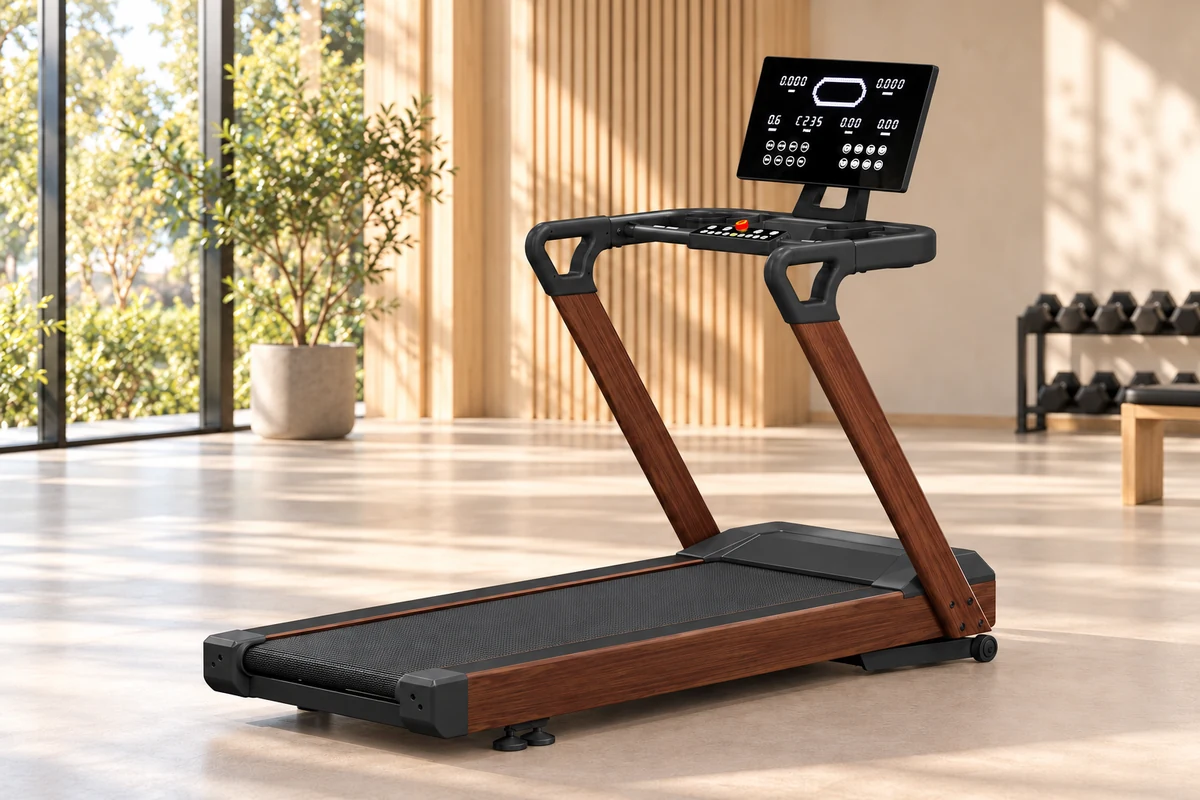
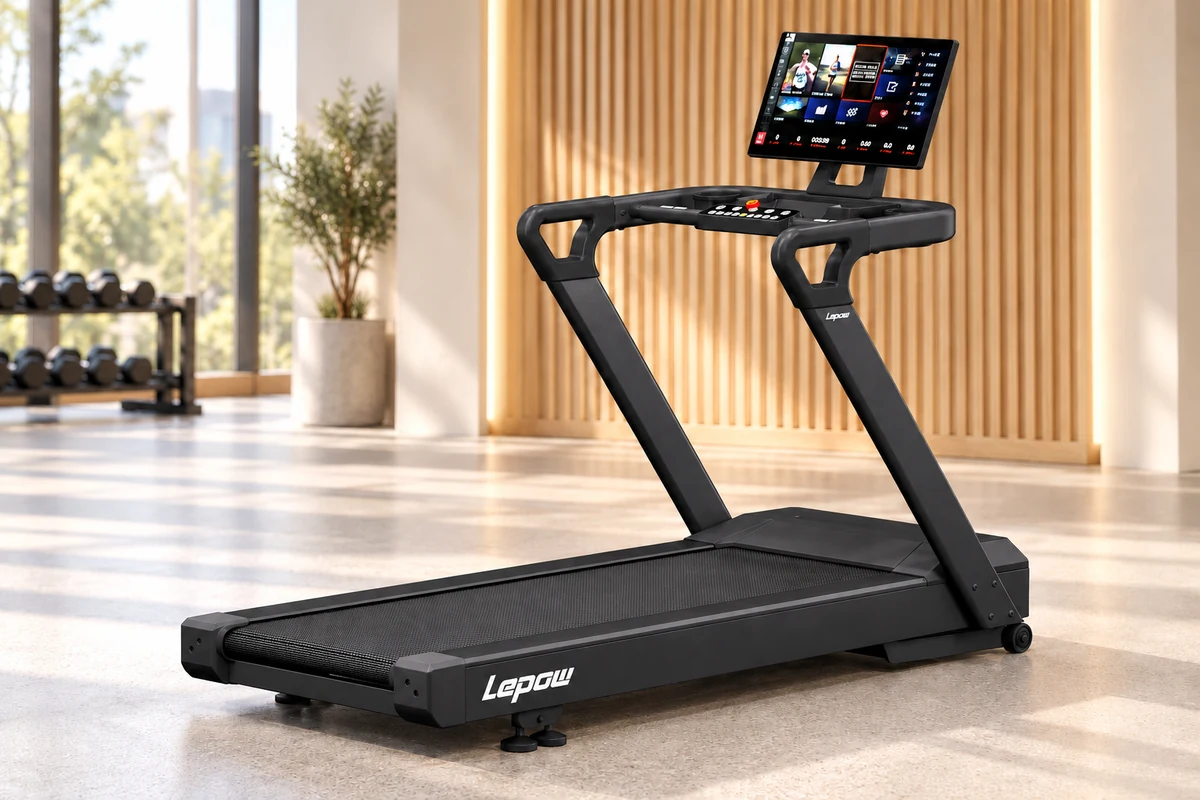
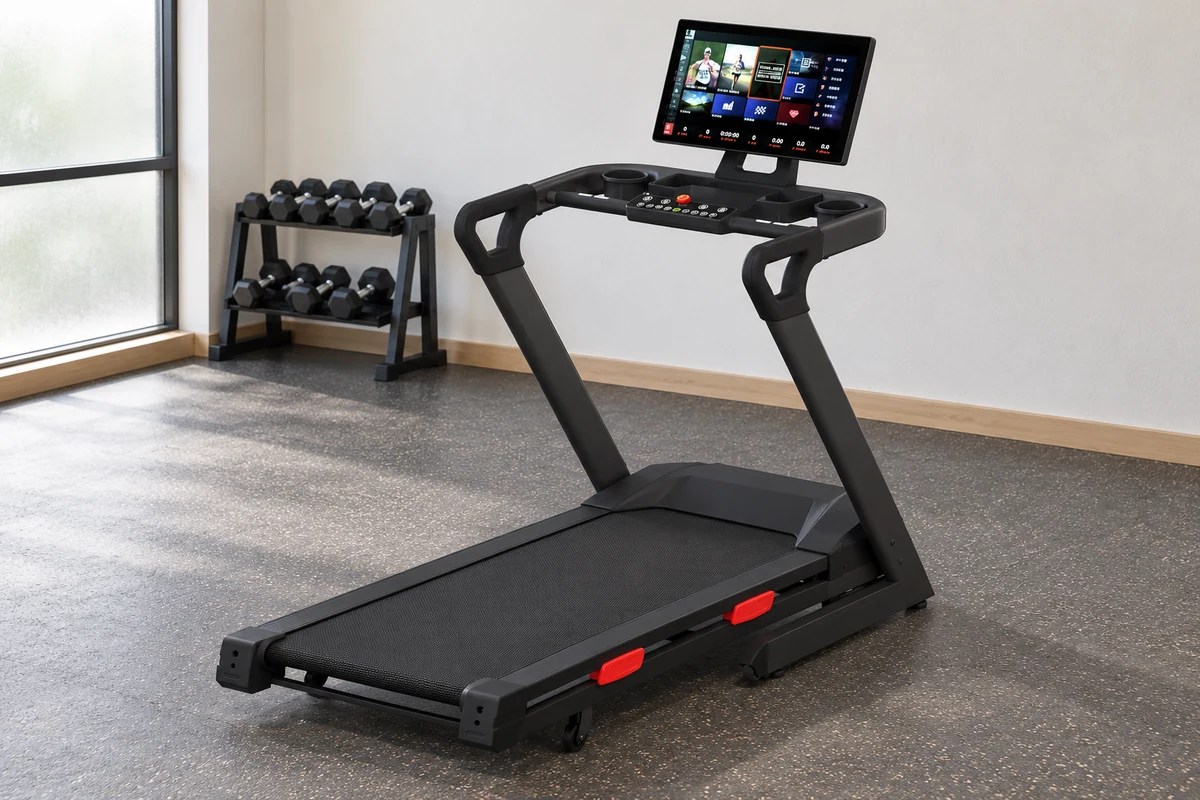
A deck that rises with the session
Adjust the incline from −3% to +40% for downhill walks, sustained climbs and hill intervals.

Incline & SLED Treadmill
LT8 combines running, steep-incline training and SLED pushing in one machine. Adjust speed, gradient and resistance for everyday cardio, personal training or small-group circuits.
Adjust the incline from −3% to +40% for downhill walks, sustained climbs and hill intervals.
Set the speed from 1–20 km/h across a 1650 × 550 mm running area, with dual AC motors supporting the training modes.
Drive the belt against adjustable resistance without a separate sled lane. The console displays resistance settings from 1–60 kg.
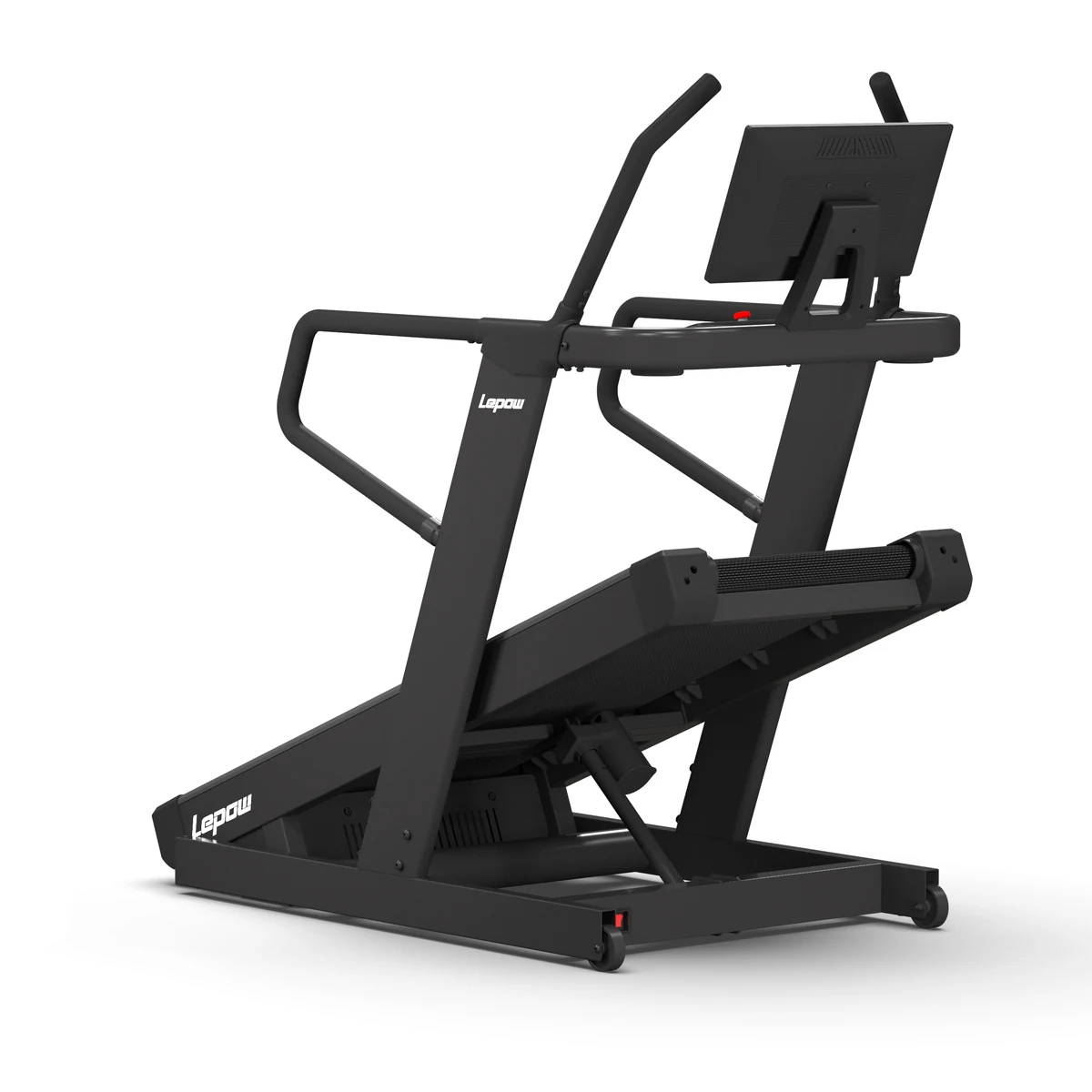
LT8 high incline position
INCLINE TRAINING / −3% TO +40%
LT8 extends the incline range from −3% to +40%. From everyday walking and running to steep climbing, coaches can use gradient to change the workload and give members who prefer walking more ways to train.
Walking uphill requires more work against gravity than walking on the level. At the same walking speed, increasing the incline generally raises energy expenditure, adding a practical option to weight-management programmes.
A controlled walking pace with a progressively higher incline can increase cardiovascular and lower-body demands. Coaches can adjust speed and gradient separately to suit each member's ability and goals.
Steady climbs, incline intervals and walk–run sessions can each form a training session. Combined with planned work and recovery periods, one machine supports both everyday cardio and more demanding conditioning.
Energy expenditure varies with body mass, speed, incline and duration. Long-term fat loss also depends on nutrition and consistent training. Incline is expressed as a percentage gradient.
Research on gradient and walking energy cost · Minetti et al., 2002
SLED / CONSTANT-POWER RESISTANCE
In SLED mode, the user actively drives the belt against resistance. The fixed station makes steady pushes and repeated intervals easy to organise, without a dedicated lane for moving a sled back and forth.
Power is the rate at which work is done. Constant-power resistance uses a relatively steady mechanical power target, adjusting resistance as pushing speed changes to support sustained output. Unlike holding resistance constant, the emphasis is on controlled effort, pacing and continuing to do work throughout the interval.
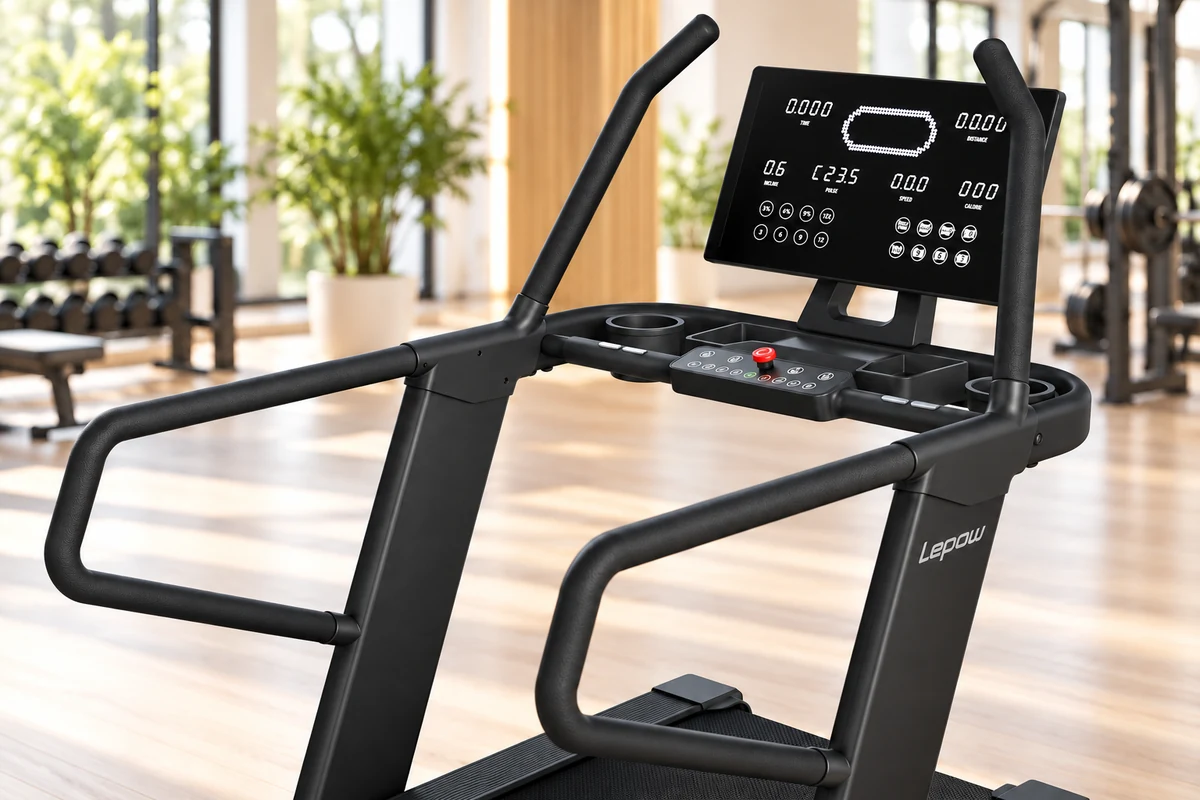
Every step requires active effort. Coaches can build drills around pushing technique, lower-body drive and trunk stability, then gradually extend the duration of each effort.
Use resistance settings, work periods and recovery time to organise short pushes or repeated intervals. Clear work and rest phases help coaches observe technique and adjust the session's demands.
Sequence SLED pushes, incline walking and running on the same machine, or combine LT8 with strength equipment in a circuit. The fixed station suits both personal training and small-group sessions.
The displayed SLED resistance setting ranges from 1–60 kg. This is a machine setting, not a measured pushing force or a power reading.
ONE MACHINE. DIFFERENT TRAINING SPACES.
From independent workouts to coached sessions, LT8's walking, running, climbing and SLED modes work on their own or as part of a combined programme.
EVERYDAY WALKING & RUNNING / INCLINE CARDIO
Meet everyday walking and running needs in the conventional cardio area while adding a steep-incline option. Coaches can introduce members to climbing and resisted pushing as their training develops.
ONE-TO-ONE COACHING / CONDITIONING
Set incline, speed and resistance around individual goals. Organise warm-ups, cardio and resisted pushes at one station, where the coach can observe technique, manage pacing and adjust the workload.
CLIMBING CLASSES / SLED INTERVALS / MIXED CIRCUITS
Build dedicated classes around incline walking, running and SLED pushing. Use several LT8 machines together or rotate between other stations. Coaches set shared work and recovery periods, with individual settings for each participant.
Select a view. Open the main image to see it larger.
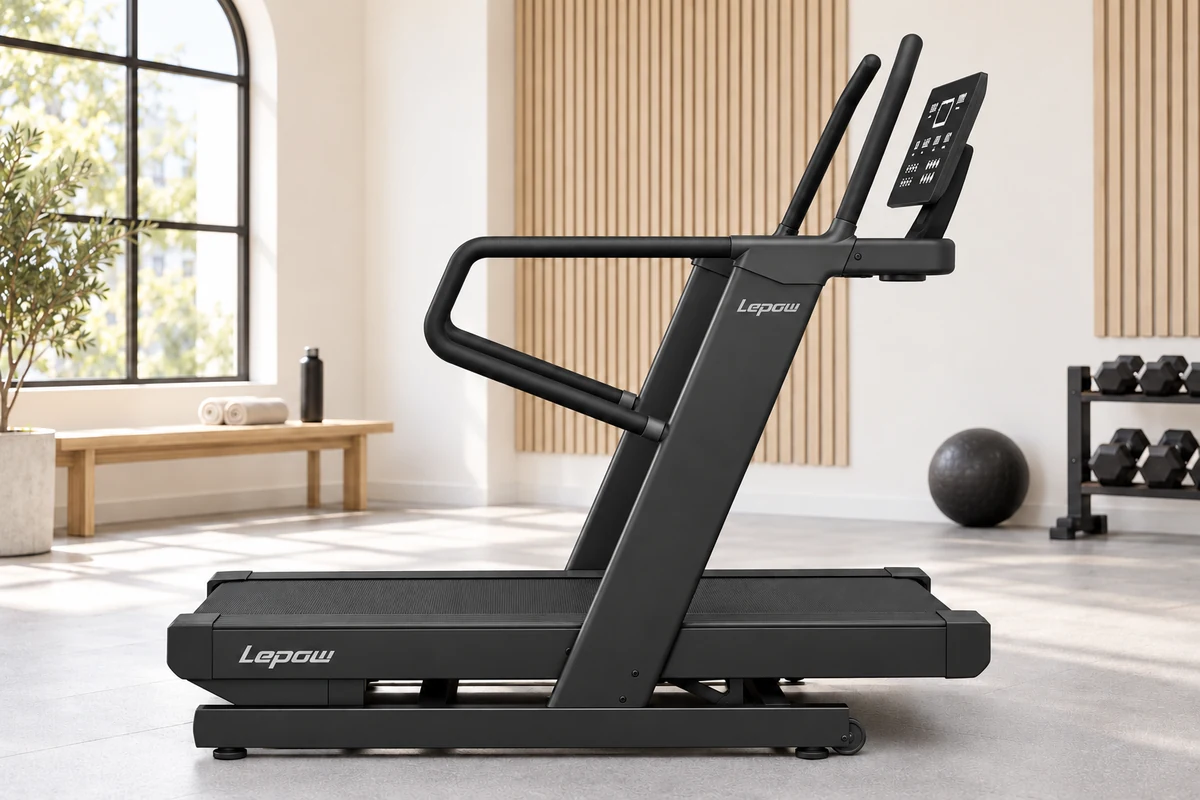
LT8 side profile · Gym concept rendering
LT8 / Product details
LED console as standard. An optional 21-inch TFT display supports 1:1 smartphone screen mirroring. SLED values are displayed resistance settings, not a measured pushing force. Confirm the display and final configuration when ordering.
Confirm the final configuration and available options with LEPOW when ordering.
| Motor system | Dual AC motors |
|---|---|
| Motor power | AC 3.0 HP |
| Speed range | 1–20 km/h |
| Incline range | −3% to +40% |
| SLED resistance setting | 1–60 kg |
| Running area (L × W) | 1650 × 550 mm |
| Running belt dimensions | 550 × 3480 mm |
| Maximum user weight | 120 kg |
| Overall dimensions (L × W × H) | 1770 × 930 × 1705 mm |
| Standard console | LED |
| Optional display | 21-inch TFT with 1:1 phone mirroring |
| Net weight | 200 kg |
LEPOW / Equipment guides
Understand training modes, equipment differences and space requirements before choosing a model.
Compare incline range, usable space and coaching needs when choosing a high-incline treadmill. See how the LEPOW LT8 fits gym and studio programmes.
Read the guide LEPOW / Equipment guidesUnderstand SLED treadmill pushing, the difference between power and resistance settings, and how LEPOW LT8 can fit coached gym circuits.
Read the guide LEPOW / Equipment guidesCompare LEPOW treadmills, Smith equipment and an adjustable bench for a gym, hotel or training studio, with practical questions to ask before ordering.
Read the guide